

Beyond Power: Why Your Building’s Fire Detection and Access Control Should Come From One Electrical Contractor
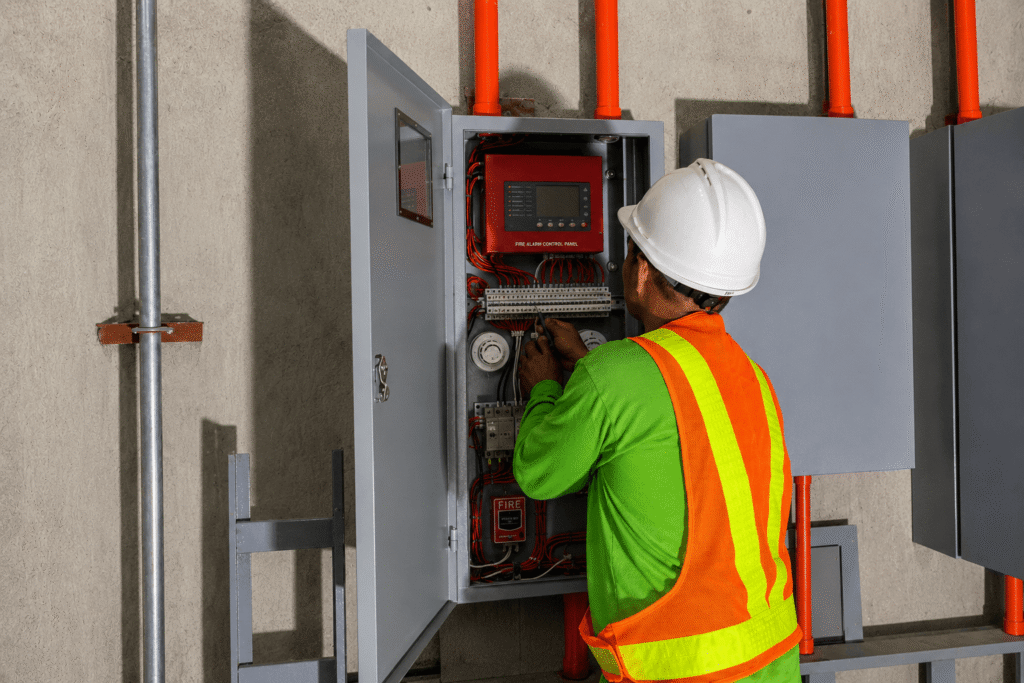
When developers and general contractors plan a building’s power distribution, panelboards, and wiring, the electrical contractor is the obvious choice. But when it comes to fire detection and access control, many projects still treat these as separate line items, awarded to separate vendors, installed on separate timelines. It seems practical on paper. In practice, it is one of the most common sources of delay, rework, and finger-pointing on a project.
The Real Cost of Splitting These Systems
Fire Detection and Alarm System (FDAS) and access control both rely on cabling, conduit, and panel space that overlaps directly with the building’s electrical infrastructure. When these are handled by separate vendors working independently, the cracks show up fast:
- Coordination conflicts. Cable trays get rerouted, panels get congested, and change orders pile up because no single party owns the full picture of what runs where.
- Compliance exposure. Fire alarm circuits, backup power requirements, and door hardware interlocks all fall under the Fire Code of the Philippines and the Philippine Electrical Code. A contractor who understands both reduces the risk of installations that fail inspection or delay occupancy permits.
- Unclear accountability. When a fire alarm fails to trip correctly or an access-controlled door does not release properly during an emergency, developers are often left with vendors pointing at each other instead of fixing the problem.
- Longer timelines, higher costs. Separate vendors mean separate mobilizations, separate coordination meetings, and separate testing schedules. All of that adds time and cost that a single, coordinated scope would avoid.
These Are Electrical Systems First
FDAS and access control are often labeled as “security” or “low-voltage” work, but at their core, both depend entirely on the building’s electrical backbone. They draw power from the same distribution system, require proper grounding and bonding, and share pathways with the rest of the building’s cabling. Access control systems also need to interlock correctly with fire alarm systems. Doors must be fail-safe or fail-secure depending on the fire event, which is a life-safety decision, not just a security one.
This is precisely why these systems are best handled by a contractor who already understands the building’s electrical infrastructure, rather than by a standalone security integrator working around it.
What One Electrical Contractor Delivers
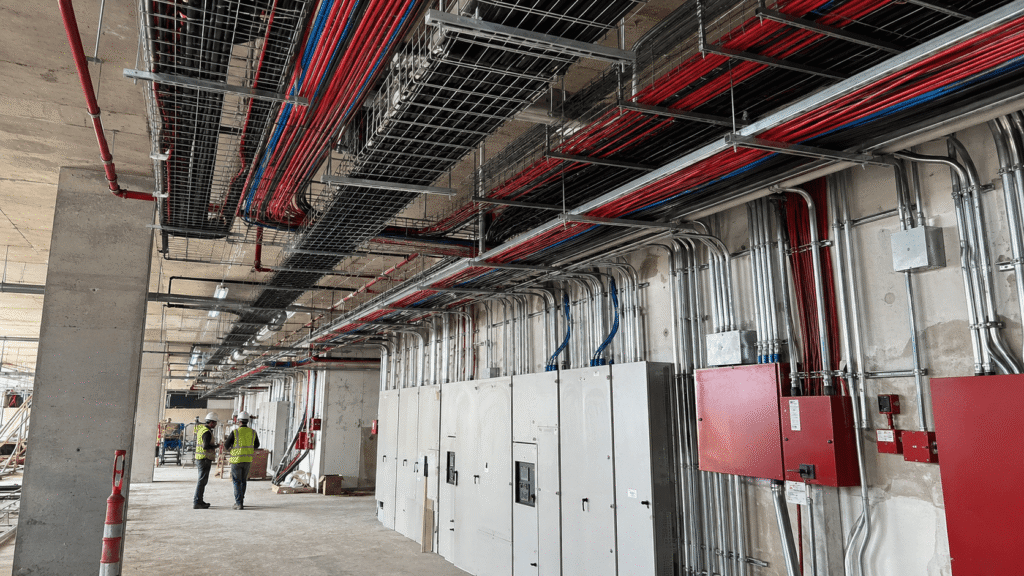
- Cable and conduit pathways planned alongside the power distribution design from day one, not retrofitted after the fact.
- Unified testing and commissioning, so fire alarm, access control, and power interlocks are verified together rather than separately.
- One warranty and one after-sales support line, instead of chasing multiple vendors when an issue comes up.
- Simplified procurement for developers and general contractors: fewer meetings, fewer change orders, faster turnover.
Greenlight Power’s Auxiliary Systems Integration
This is the thinking behind Greenlight Power’s Auxiliary Systems Integration service. As a PCAB-licensed, ISO 9001:2015 certified electrical contractor, Greenlight scopes and installs these systems as part of the same electrical infrastructure we already build, giving project developers, general contractors, and consultants a single point of accountability from design coordination through commissioning.
- Fire Detection and Alarm System (FDAS) — Life safety detection and alarm systems coordinated directly with the building’s power and backup infrastructure.
- Access Control System — Door hardware and access management linked with fire alarm interlocks for life safety compliance.
- CATV, Telephone, and PABGM Systems — Integrated cable TV, voice, and public address/background music infrastructure sharing common conduits and pathways.
- Structured Cabling — The core cabling backbone supporting data and building systems alongside main electrical routes.
- FTTH (Fiber to the Home) Network System — High-speed fiber infrastructure integrated into the building’s low-voltage network.
Planning a project that involves fire detection, access control, or other auxiliary systems? Bring Greenlight Power into your project planning, so these systems are designed as one coordinated scope instead of a patchwork of separate vendors. Reach out to our team to discuss your project requirements.