

How does Greenlight Power Supports Uninterrupted Data Center Operations
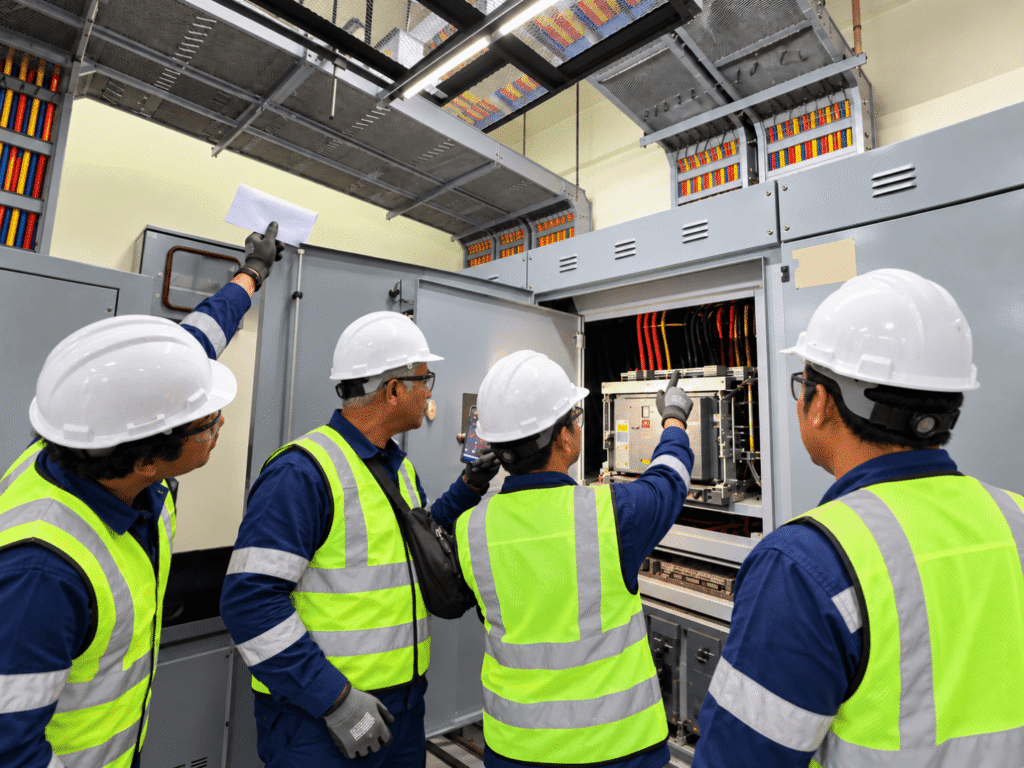
What if you are making an online transaction, accessing an important business application, or retrieving information from the cloud when the electricity supplying a data center suddenly fails?
For facilities supporting these digital services, a power interruption can affect more than the electrical equipment inside a server room. Depending on the systems involved, it may disrupt connected applications, network availability, and business operations.
This is why data centers are designed with electrical infrastructure that goes beyond an ordinary power supply.
But what actually happens when a data center loses power, and what prevents its critical systems from immediately shutting down?
The answer lies in a combination of backup power equipment, electrical distribution systems, and properly coordinated operations.
Why Is Continuous Power Important in Data Centers?
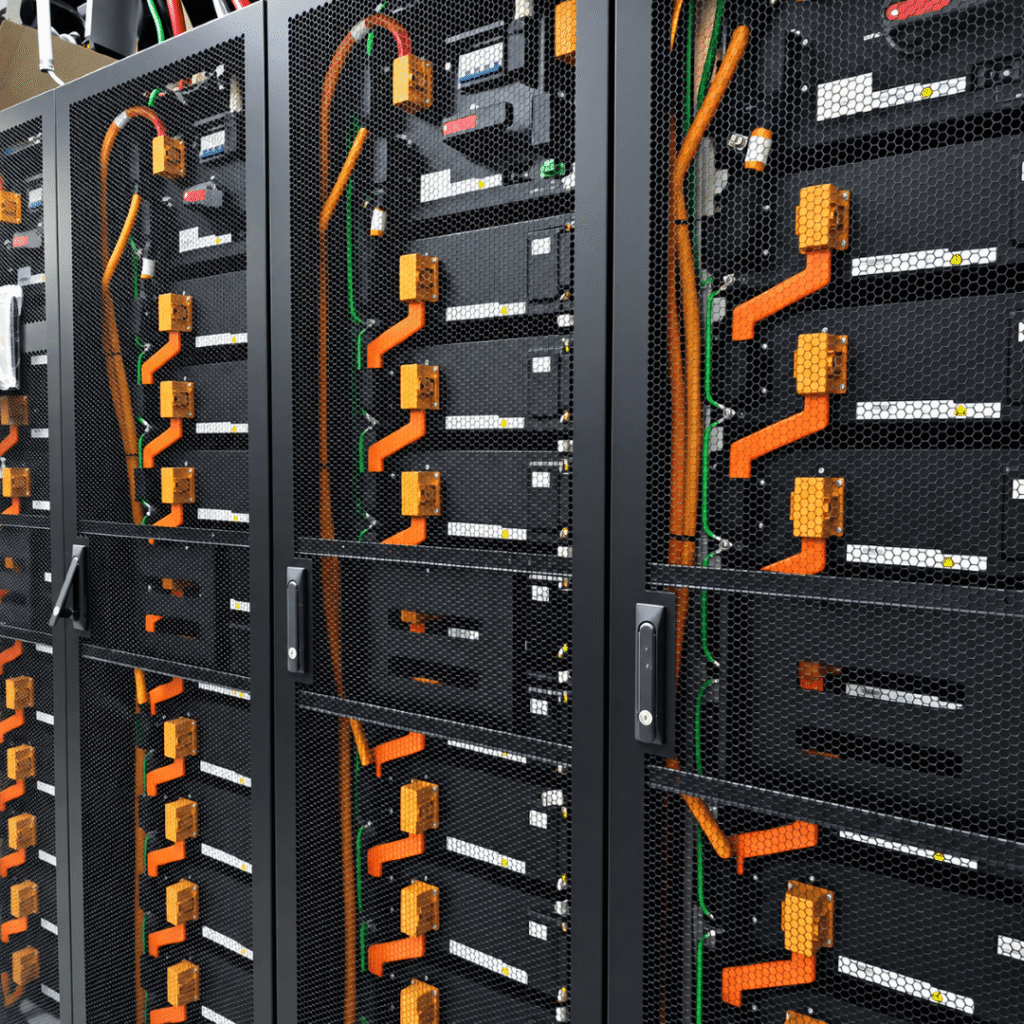
(Successful Installation of a Battery System and Uninterruptible Power Supply (UPS) at the Subic Data Center. May 07, 2025.)
Data centers house servers, storage devices, networking equipment, and supporting infrastructure used to process, store, and transmit information.
These systems support many digital services, from business applications and financial transactions to telecommunications and cloud-based platforms.
Unlike facilities where some electrical loads can be temporarily switched off with limited consequences, many data center applications require high levels of availability.
According to Uptime Institute’s Annual Outage Analysis 2026 1, power-related incidents remain the leading cause of impactful IT and data center outages, accounting for approximately 45% of such events reported in its 2025 survey findings.
This highlights why electrical reliability remains a major consideration in data center design, operation, and maintenance.
What Happens When a Data Center Loses Its Main Power Supply?
A power interruption does not necessarily mean that every server immediately shuts down.
In facilities equipped with properly designed backup power infrastructure, several systems are intended to respond when the primary electrical supply fails.
When utility power is interrupted, the immediate concern is maintaining the electrical supply to equipment that supports essential data center functions. Servers, networking devices, and other critical systems may be sensitive to sudden power loss, making the availability of an alternative power source important for continued operation.
This is where the coordination of backup power systems becomes essential. Rather than relying on a single piece of equipment, data centers may use a combination of systems that provide temporary energy support and facilitate the transition to another power source. Each component has a specific role in helping reduce the risk of operational interruptions.
The sequence generally involves three important stages 2.
1. The UPS Maintains Power to Critical Equipment
The first critical component is the Uninterruptible Power Supply (UPS).
An Uninterruptible Power Supply (UPS) helps protect critical data center equipment against power interruptions and certain electrical disturbances. As explained in Eaton’s technical resources on UPS systems for data centers, these systems play an important role in supporting power availability for servers, networking equipment, and other essential infrastructure.3
For example, an online double-conversion UPS uses power electronics to provide regulated output. When the incoming supply fails, its connected energy storage system supplies power through the inverter.
This helps prevent an immediate interruption to supported servers, networking devices, and other critical equipment.
However, a UPS does not provide unlimited backup power. Its available runtime depends on its design, battery capacity, equipment condition, and connected electrical load.
2. Battery Systems Provide Temporary Energy Support
Once the UPS is operating on stored energy, the battery system becomes essential.
Industrial battery systems provide temporary electrical energy while the facility prepares to transition to a longer-duration source or awaits the restoration of utility power.
Depending on the installation, data centers may use different battery technologies, including valve-regulated lead-acid (VRLA) and lithium-ion batteries.
The appropriate battery configuration depends on several factors, including power requirements, expected runtime, space limitations, environmental conditions, and maintenance considerations.
For data center operators, batteries are not simply accessories to a UPS. Their capacity, health, and compatibility with the overall system influence how effectively critical equipment can remain supported during interruptions.
3. Standby Generators Support Extended Power Interruptions
When an interruption lasts longer than the available UPS battery runtime, a standby generator may provide a longer-duration electrical supply.
In a typical configuration, the generator starts following the loss of utility power. Once its output reaches the required operating conditions, the electrical system transfers the appropriate loads to the backup source.
Automatic Transfer Switches (ATS), switchgear, and associated controls help manage this transition according to the facility’s electrical design.
Throughout the process, the UPS continues supporting its connected critical loads, provided sufficient energy is available and the system operates as intended.
The objective is to maintain electrical continuity while the facility transitions between available power sources.
In other words, a reliable backup power system depends on how effectively the UPS, batteries, generators, transfer equipment, and electrical distribution systems work together.
Beyond Backup Power: Why Electrical Distribution Matters
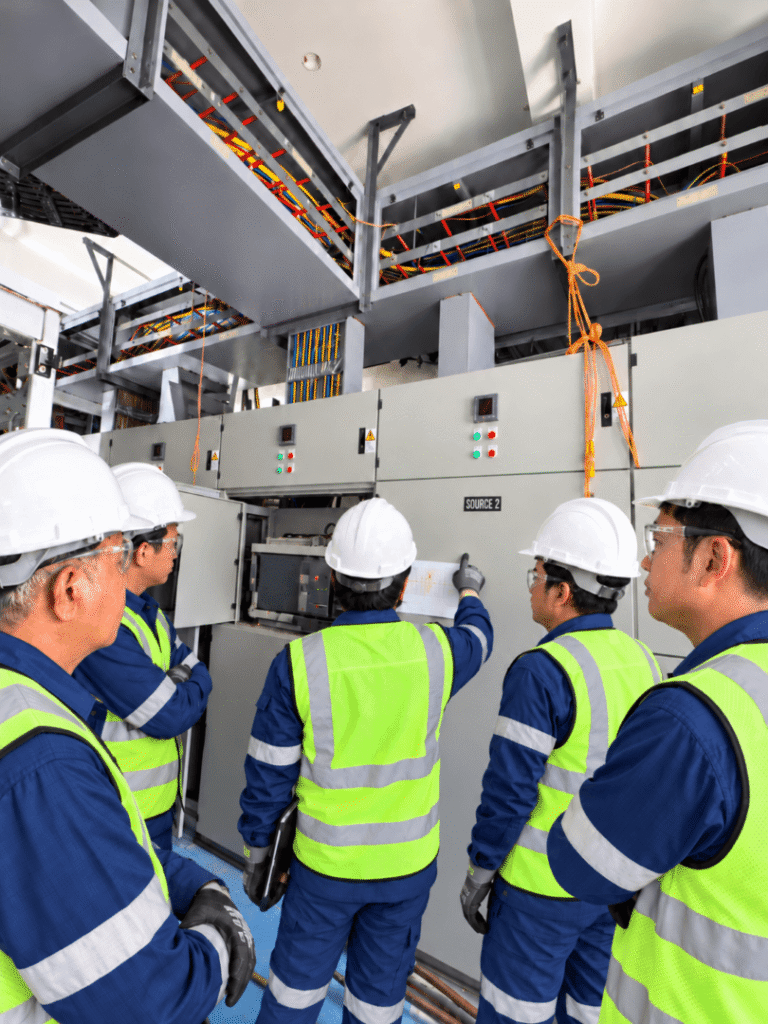
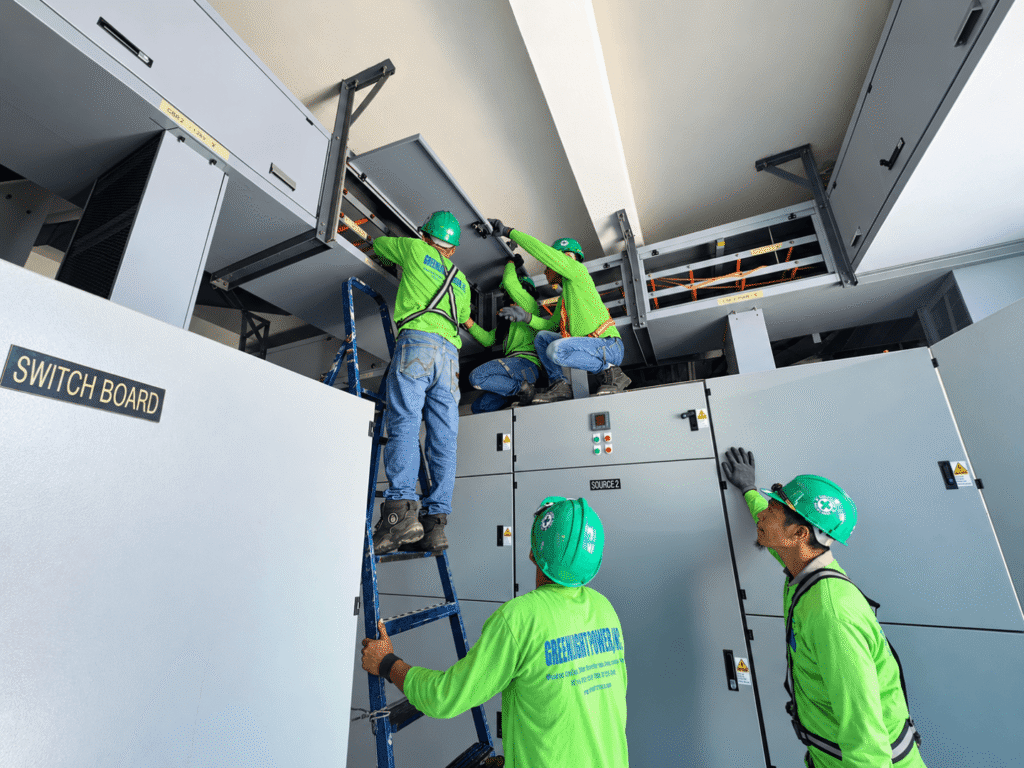
While UPS systems and generators often receive the most attention, another important aspect of data center reliability is the electrical infrastructure responsible for delivering power throughout the facility.
Switchgear, circuit breakers, transformers, busduct systems, and electrical cables may all form part of the power distribution network.
These components perform different functions, from voltage transformation and electrical protection to distributing power across critical equipment.
For example, switchgear and protective devices help control electrical circuits and isolate faults, while cable routing and distribution arrangements support organized connections between equipment.
However, having these components installed does not automatically guarantee reliable performance.
Proper equipment selection, electrical coordination, installation practices, and testing are important considerations to ensure the distribution system operates according to its intended design.
This is particularly relevant in data centers, where a fault or equipment failure affecting the electrical distribution network may interrupt multiple connected systems.
Why Testing and Preventive Maintenance Should Not Be Overlooked for Data Centers
Even a carefully designed electrical system requires ongoing maintenance.
Over time, electrical equipment may experience wear, loose connections, insulation deterioration, environmental exposure, or other conditions that affect its performance.
For critical facilities, preventive maintenance programs help identify potential issues before they develop into more serious operational problems.
Depending on the equipment and maintenance requirements, technical activities may include:
- Electrical inspection and condition assessment
- Insulation resistance testing
- Thermographic inspection
- Verification of electrical connections and protective devices
- UPS and battery system inspections
- Functional testing of transfer and backup power arrangements
These activities should be planned and conducted by qualified personnel, following equipment specifications and applicable electrical safety procedures.
According to Uptime Institute’s 2026 outage analysis, failures involving UPS systems, generators, and transfer switches continue to contribute to major power-related incidents.1
This reinforces the importance of considering not only the presence of backup systems but also their actual operational readiness.
Regular testing can also help facility operators determine whether critical electrical systems are prepared to respond during unexpected power disturbances. For instance, functional testing of transfer equipment and backup power arrangements may reveal operational issues that are not immediately visible during normal conditions. Identifying these concerns allows maintenance teams to plan corrective actions before an actual interruption occurs.
Another important consideration is the coordination of maintenance activities across interconnected electrical systems. Since data center operations may depend on multiple power sources and distribution paths, inspections and testing should be carefully scheduled to reduce unnecessary operational disruption. Maintenance planning should account for equipment availability, critical loads, and applicable safety procedures.
Ultimately, preventive maintenance is not simply about keeping electrical equipment in good condition. It is also about understanding how individual components contribute to the overall performance of the facility. When supported by proper documentation, periodic assessments, and qualified technical personnel, maintenance programs can help businesses make informed decisions about equipment upkeep, system improvements, and long-term infrastructure requirements.
Preparing Data Centers for Growing Electrical Demands
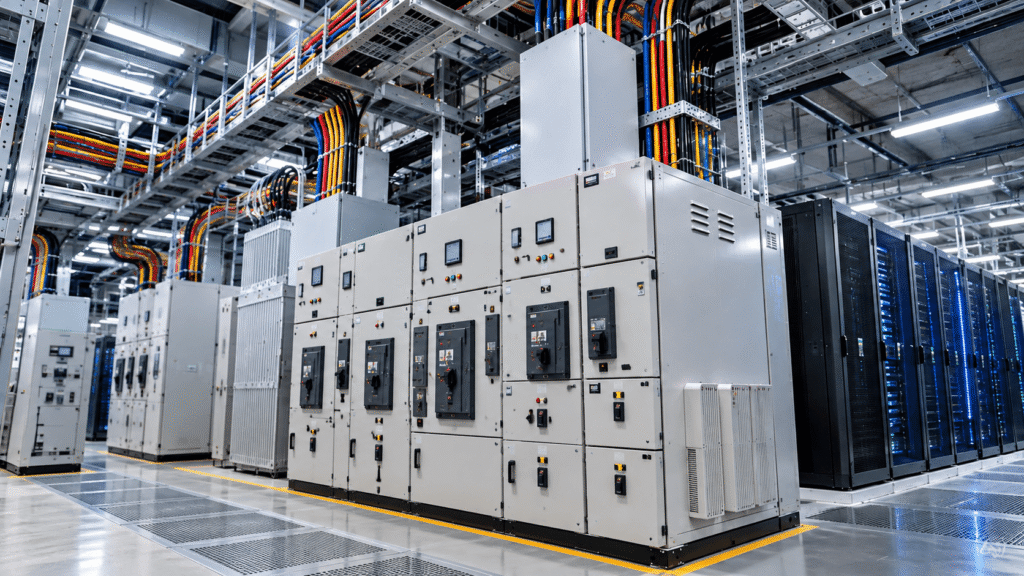
Disclaimer: Image is for visual reference only. Equipment shown is illustrative and may differ from actual products, specifications, and installations.
Data center infrastructure is also evolving as demand for cloud services, digital applications, and artificial intelligence increases.
A 2026 report by Lawrence Berkeley National Laboratory projects substantial growth in U.S. data center electricity consumption through 2030, although actual requirements will vary across regions and facilities. 4
As computing requirements change, operators may need to reassess electrical capacity, distribution arrangements, backup power requirements, and future expansion plans.
For new data center developments, this means considering electrical infrastructure early in the project planning stage.
For existing facilities, it may involve evaluating whether current systems can safely accommodate additional equipment and changing operational loads.
The appropriate approach depends on the facility’s existing infrastructure, reliability objectives, and expected electricity demand.
How Greenlight Power Supports Critical Electrical Infrastructure for Data Centers
When a data center experiences a power interruption, maintaining critical operations depends on more than one backup device. It requires electrical systems designed, installed, and maintained to operate together.
At Greenlight Power, we support critical electrical infrastructure requirements through our capabilities in electrical works, equipment supply, UPS and industrial battery systems, power distribution, and preventive maintenance.
From supplying electrical equipment to supporting installation and maintenance requirements, Greenlight works with businesses and project stakeholders in developing electrical solutions suited to their operational needs.
Planning or Upgrading Your Critical Power Infrastructure?
Whether you’re developing a new facility or assessing an existing electrical system, understanding your power distribution and backup requirements is an important part of long-term planning.
Connect with Greenlight Power to explore electrical infrastructure solutions for your project.
Visit www.greenlightpowerinc.com or contact us through our official Facebook page https://www.facebook.com/greenlightpowerinc to discuss your requirements.
References
- Uptime Institute (2026). Annual Outage Analysis 2026: The Causes and Impacts of IT and Data Center Outages.
https://datacenter.uptimeinstitute.com/rs/711-RIA-145/images/2026.AnnualOutageAnalysis.pdf - Schneider Electric Philippines (2022, updated 2026). What Is a 3-Phase UPS?
National Laboratory of the Rockies (2026). Data Center Power Systems: Architectures, Impact on Grid Reliability, Modeling Considerations, and Megawatt-Scale Hardware Testing.
https://docs.nlr.gov/docs/fy26osti/96746.pdf - Lawrence Berkeley National Laboratory (2026). United States Data Center Energy Usage Report: 2025 Update.
https://doi.org/10.71468/P1RP4F - Eaton. UPS Systems for Data Centers.
https://www.eaton.com/ng/en-gb/products/backup-power-ups-surge-it-power-distribution/backup-power-ups/ups-applications/ups-data-centers.html